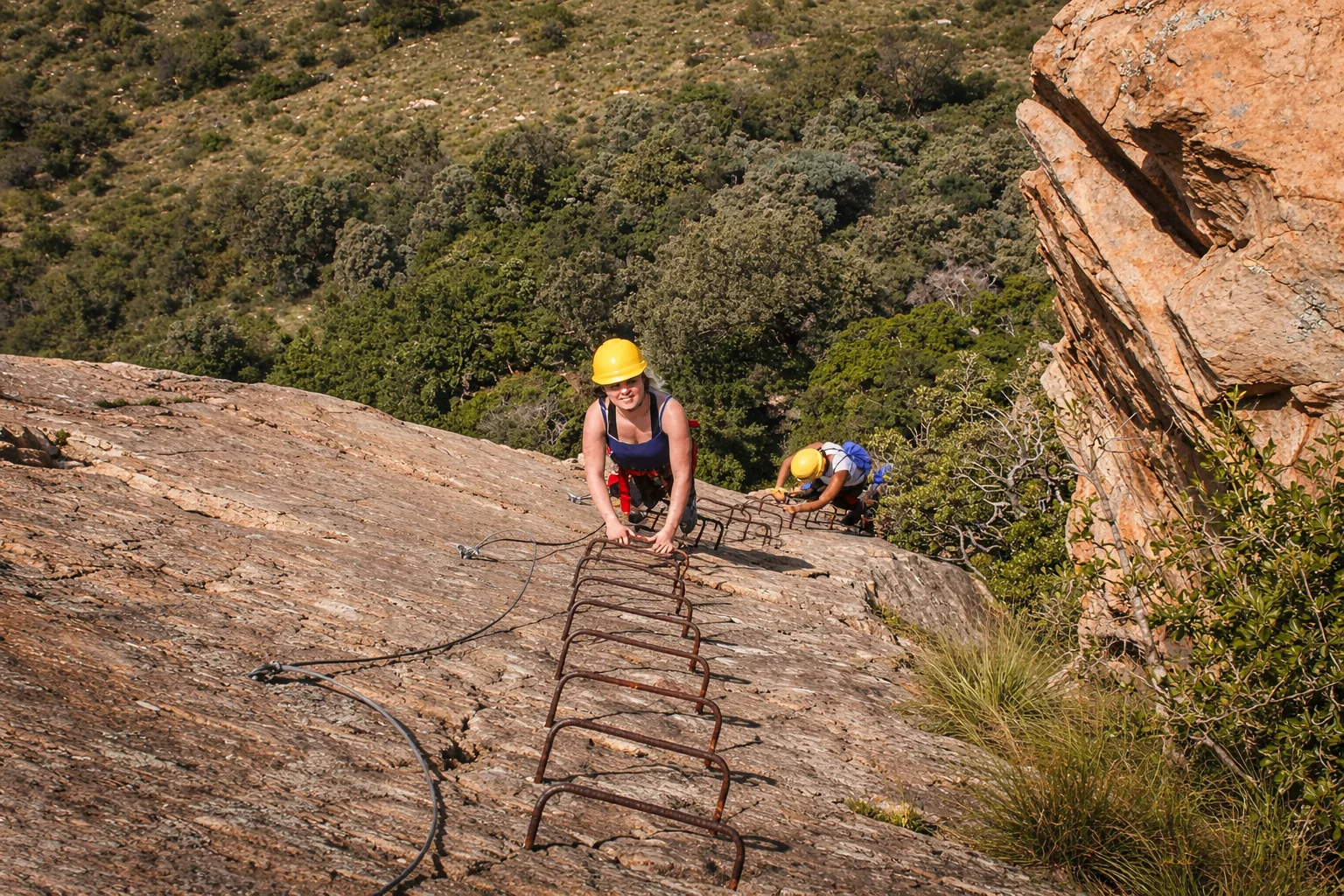
The iron way
Real cliff, protected route.
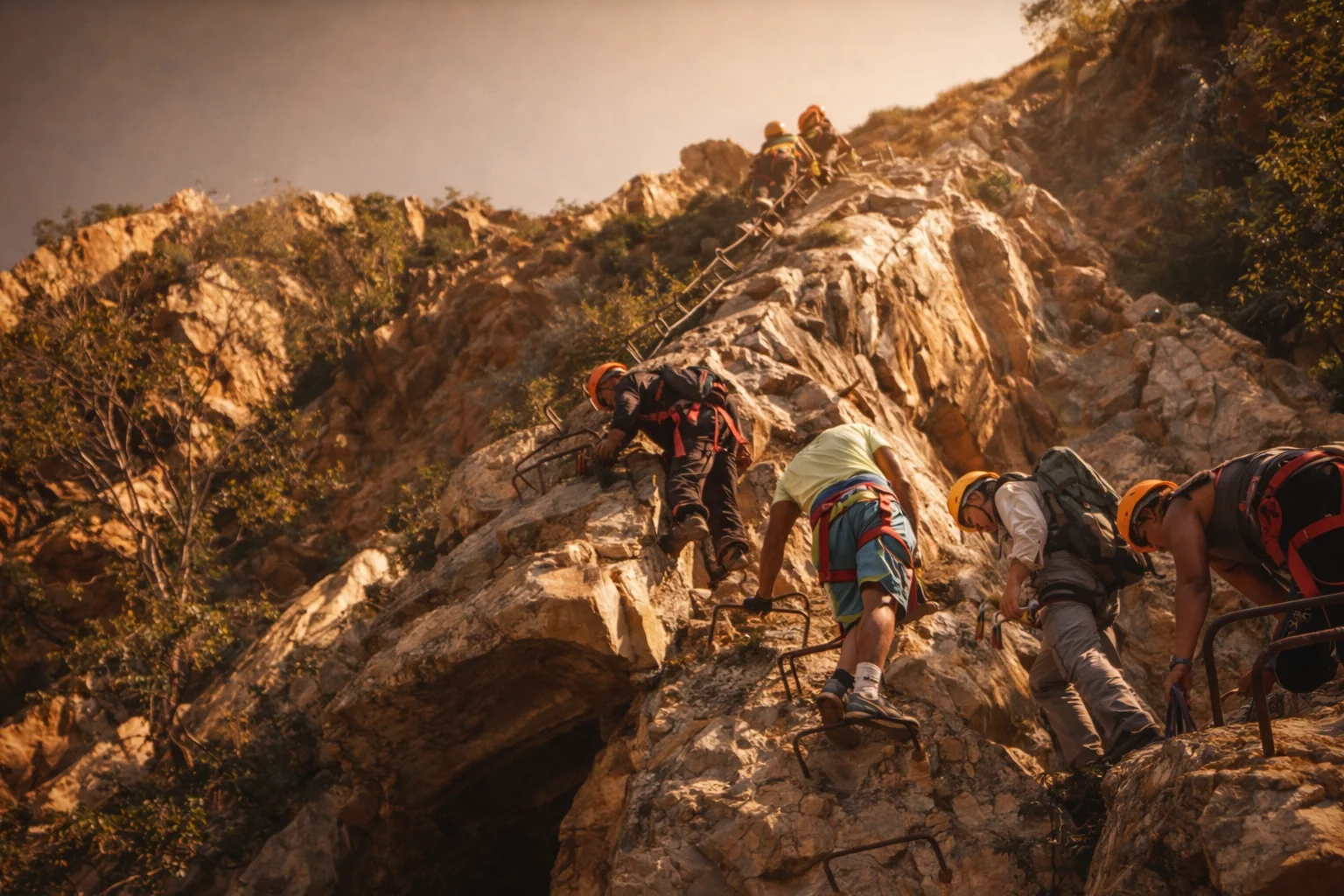
Steel rungs, ladders and a continuous safety cable turn a genuine Magaliesberg cliff face into a route you can climb on your first visit — no rope skills, no belaying, no indoor wall.
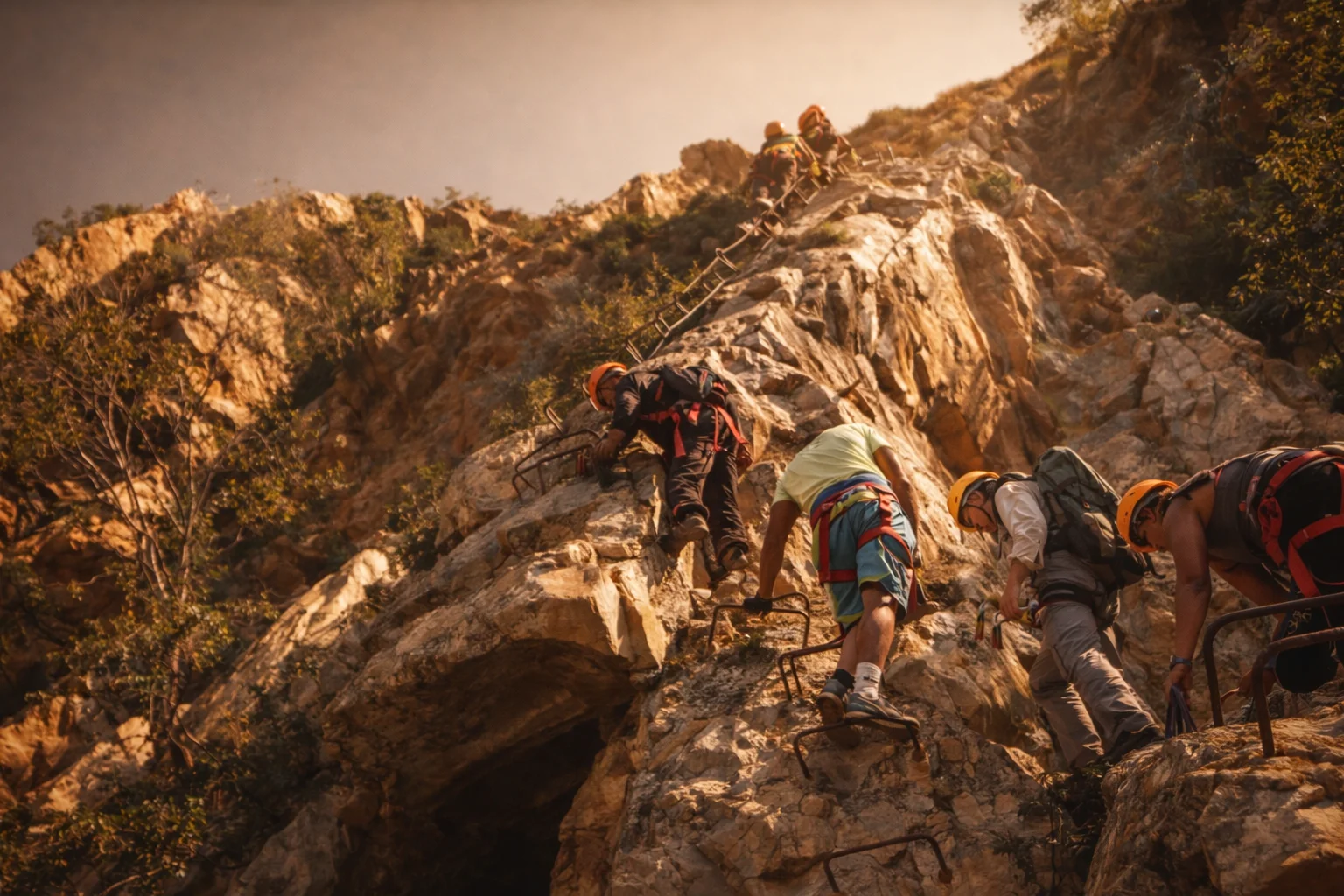
A guided climb up a natural Magaliesberg sandstone cliff — iron rungs, a continuous safety cable and a ridge-top view earned metre by metre. No climbing experience required, no indoor wall in sight.
Shelter Rock offers one of South Africa's few Via Ferrata experiences, located in the Magaliesberg within easy driving distance of Johannesburg and Pretoria.
The Via Ferrata is not part of the hiking trail.
Advance booking required. All technical equipment and a guide included.
R750
Per person
1.2 m
Minimum height for children
110 kg
Maximum weight
Adults and children pay the same rate. Children must be at least 1.2 m tall and meet the weight requirement for equipment safety.
The Shelter Rock Via Ferrata takes a genuine Magaliesberg cliff face and makes it climbable in a single guided session — real rock, real height and the same ridge that has watched the valley for a very long time.
The route follows a natural Magaliesberg sandstone cliff — weathered rock, real height, no manufactured structure between you and the mountain.
A continuous steel cable and fixed iron rungs replace the rope skills of traditional climbing. Clip in, step up, transfer past each anchor — the technique takes minutes to learn.
The route reaches the same ridge as the hiking trail — Boer War fort sites, ancient sandstone, and a valley view earned metre by metre rather than walked to.
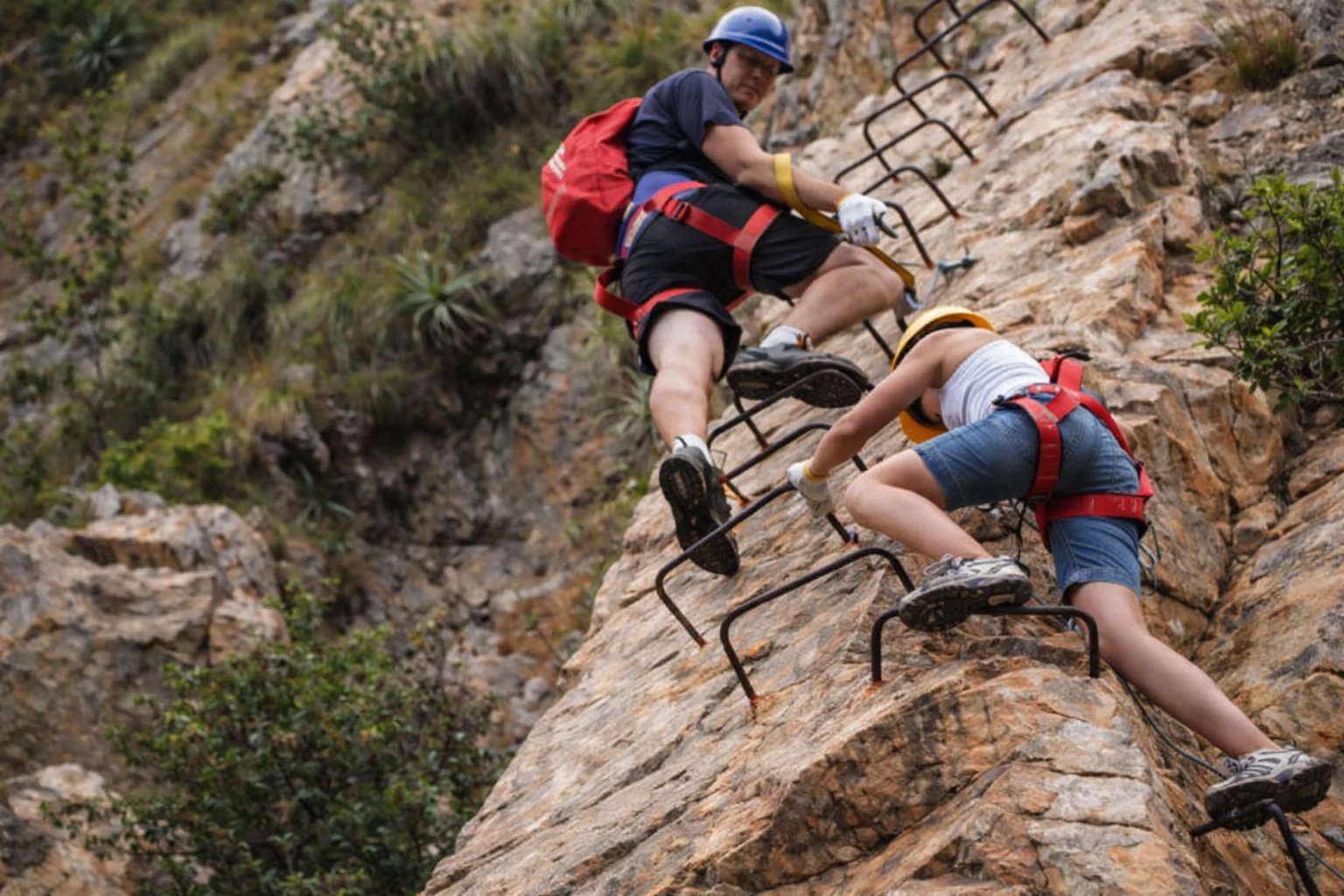
Your session begins with registration, equipment fitting and a safety briefing. Your guide explains how the cable system works, how to transfer the carabiners and what to expect on the route.
A mountain approach leads from base camp toward the start of the Via Ferrata. The cliff gradually changes from scenery into the route you are about to climb.
The opening section gives you time to settle into the movement: clip, step, transfer, continue. Most first-timers become more confident once they understand the rhythm of the system.
Steel rungs and fixed protection guide you upward across the natural rock face. Some sections feel straightforward. Others require concentration and a willingness to move beyond your normal comfort zone.
Rest points provide time to look back across the landscape and appreciate how much height you have gained. This is often where nervousness gives way to enjoyment.
The final section brings you onto the upper mountain, with open views and access to historical features along the ridge. The return to base camp follows the mountain trail on foot.
You descend on foot, looking back at the cliff you climbed only a short while earlier. It almost never looks as manageable from below.
One guided route on a natural Magaliesberg cliff face in the Hartbeespoort area, within easy reach of Johannesburg, Pretoria and the West Rand. Physically demanding but non-technical — the kind of morning that reframes what you thought was possible on a weekend in the North West Province.
No rope systems. No indoor walls. Just real mountain.
Earn the summit rather than simply reaching it.
Supported from briefing to descent.
Experience the Magaliesberg from the cliff instead of the trail.
Steel rungs, ladders and a continuous safety cable turn a genuine Magaliesberg cliff face into a route you can climb on your first visit — no rope skills, no belaying, no indoor wall.
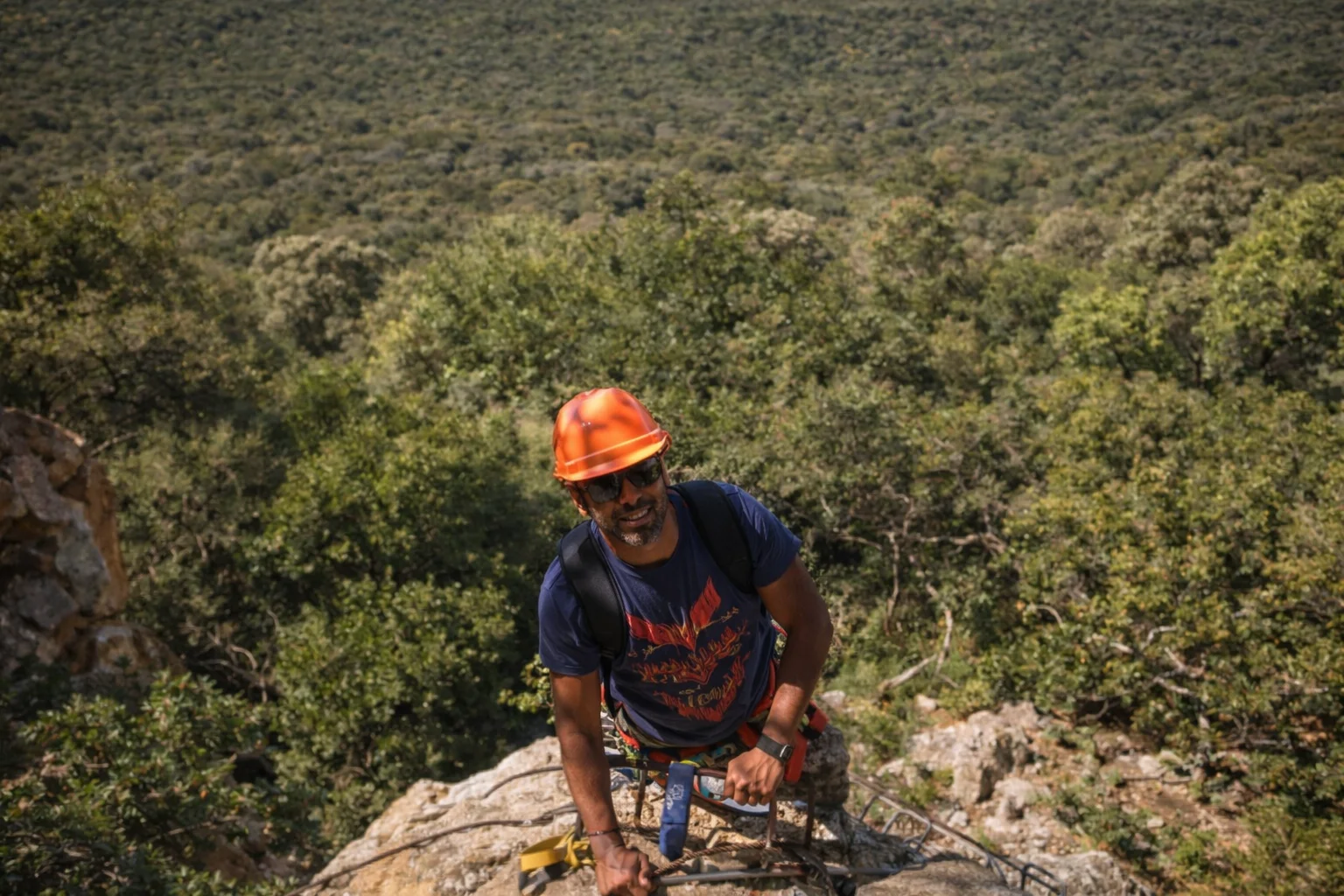
The final section brings you onto the upper mountain, close to the same Boer War fort sites walked on the hiking trail — the view alone tells you why the position mattered. Remember, the Via Ferrata is a separate guided activity and is not included in the hiking trail.
Steel rungs, ladders and a continuous safety cable turn a genuine Magaliesberg cliff into a route you can climb on your first visit. The system is European in origin, refined over decades.
Height reveals the Magaliesberg in a way no path does. Hartbeespoort in the distance, the plains stretching toward Johannesburg and Pretoria, the ridge line of the range itself.
The route emerges close to Boer War fort sites and the same ridge walked on the hiking trail — the reason the position was defended in the first place is clear from up there.
For most participants, the transition from ground to cliff — the first proper clip in — is the moment the experience begins in earnest.
A short look at the Shelter Rock Via Ferrata route in the Magaliesberg.
Via Ferrata means “iron way” in Italian — a protected mountain route fitted with a fixed steel cable, iron rungs, ladders and anchored safety points.
You wear a harness connected to a purpose-built lanyard with two carabiners. As you move past each cable anchor, the carabiners are transferred one at a time so that you remain connected to the system.
The format lets you experience real mountain height and exposure without the rope techniques of traditional climbing. Protected routes of this kind developed in the European Alps and became particularly associated with the fixed military routes built through the Dolomites during the First World War.
Impact protection
Anchor point on the body
Two carabiners · energy absorber
Continuous protection along the route
The Magaliesberg cliff itself
Read top to bottom — every step in the chain that keeps a climber connected to the mountain.
The exposure is real. The fixed system and guide support are designed to manage the risks of the activity, not remove them entirely.
Summer conditions can become hot on the exposed cliff — morning sessions are strongly preferred.
Most people arrive wondering whether they'll be able to do it. Very few leave disappointed.
The combination of genuine mountain exposure, experienced guides and the sense of achievement at the summit makes the Via Ferrata one of Shelter Rock's most memorable experiences.
If you're looking for something beyond a normal hike — but without needing technical climbing skills — this is where many visitors discover what they're actually capable of.
No. The Via Ferrata is a separate guided climbing experience with its own booking, fee and safety briefing. The hiking trail and the Via Ferrata share some of the same mountain environment, but they are different activities with different requirements.
No. The route is intended to make exposed mountain terrain accessible without the rope skills required for traditional climbing.
You should have reasonable general fitness and be comfortable walking uphill, climbing ladders and moving across uneven terrain.
Yes, provided you meet the physical requirements and are comfortable with height. Most participants are first-time Via Ferrata climbers.
No. Via Ferrata uses fixed steel protection and iron rungs. Traditional climbing relies on climbing technique, natural holds, ropes and belaying.
Yes. The technical equipment required for the experience is provided. Confirm the final list with the operator before your visit.
4 to 5 hours.
There is no fixed age minimum. Children must be at least 1.2 m tall and meet the 110 kg maximum weight requirement for equipment safety.
Climbing activities may need to be postponed if conditions make the mountain unsafe. Confirm the current rescheduling policy when booking.
Some nervous first-time participants complete the route successfully, but the height and exposure are genuine. Speak to the team before booking if you are unsure.
It happens, and the route is set up for it. A guide stays with the group throughout, and there are natural pause points along the cliff where a climber can stop, catch their breath and talk it through. If continuing isn't the right call, the guide manages a controlled retreat back to the last stable section — you stay clipped to the cable the entire time. The challenge is real; being stuck up there on your own is not part of it.
Yes. Advance booking is required to arrange the guide, equipment and group capacity.
R750 per person. The rate includes all technical equipment and a guide for the session.
Shelter Rock is in the Magaliesberg near Hartbeespoort, within driving distance of Johannesburg and Pretoria.
Climb real rock, move beyond your comfort zone and see the Magaliesberg from a perspective few visitors experience.
Book your adventure
Chat to us on WhatsApp